
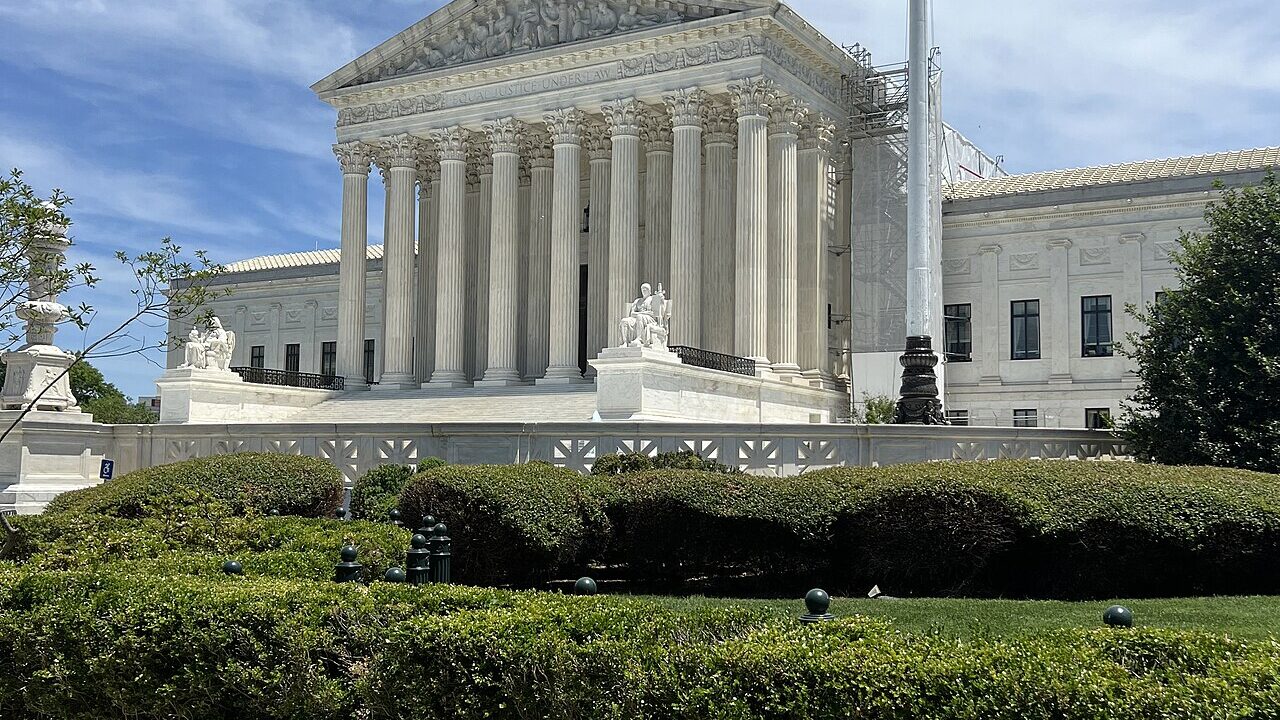
The United States Supreme Court will hear arguments on Wednesday over whether state and local bans on AR-15 style rifles violate the Second Amendment, in one of the most important gun cases to reach the court in decades.
The justices will take up two consolidated cases, Khaya v. Cook County, challenging a 1993 ordinance in Cook County, Illinois, and Grant v. Higgins, challenging Connecticut’s ban on AR-15 and similar semiautomatic rifles. The question before the court is whether the Constitution protects the right to possess AR-15 platform rifles and similar weapons.
Eleven states and the capital have bans
Eleven states and the District of Columbia ban assault weapons, according to Everytown for Gun Safety, and the fate of those laws now rests on the court’s answer. The challengers argue that the AR-15 is the most popular rifle in the country, and that guns in common use cannot be banned under the court’s 2008 decision in District of Columbia v. Heller.
The court’s own words may help the challengers. The justices noted last year that the weapons are widely legal, purchased by many ordinary consumers, and that the AR-15 is the most popular rifle in the country. The plaintiffs use the phrase common use 56 times in their main brief.
Connecticut and Cook County lean on the court’s 2022 decision in New York State Rifle and Pistol Association v. Bruen, which requires gun restrictions to be rooted in historical tradition. They argue that the AR-15 is closely tied to its military counterpart, the M16, and that it is more dangerous than other guns. The challengers reject that claim.
Roberts and Barrett in the spotlight
At least four conservative justices have signalled scepticism about the bans, so much attention will fall on Chief Justice John Roberts and Justice Amy Coney Barrett at the arguments on December 2. If the court’s three liberal justices support the bans, the government side will need at least two more votes, and courts elsewhere have also tested state power this year.
The case took an unusual turn last month, when the original lead petitioner, Cutberto Viramontes, asked to withdraw without giving a public reason. The court granted the request on November 23, leaving Christopher Khaya as the lead petitioner alongside the Firearms Policy Coalition and the Second Amendment Foundation.
Fourteen years after the Sandy Hook Elementary School shooting, in which a gunman killed 20 first graders and six educators, the court is ruling for the first time on the availability of such a high profile firearm. A decision is expected in the spring, and legal analysts say the ruling could shape future challenges to federal firearms rules, much as other high profile court rulings have drawn close attention this year.