

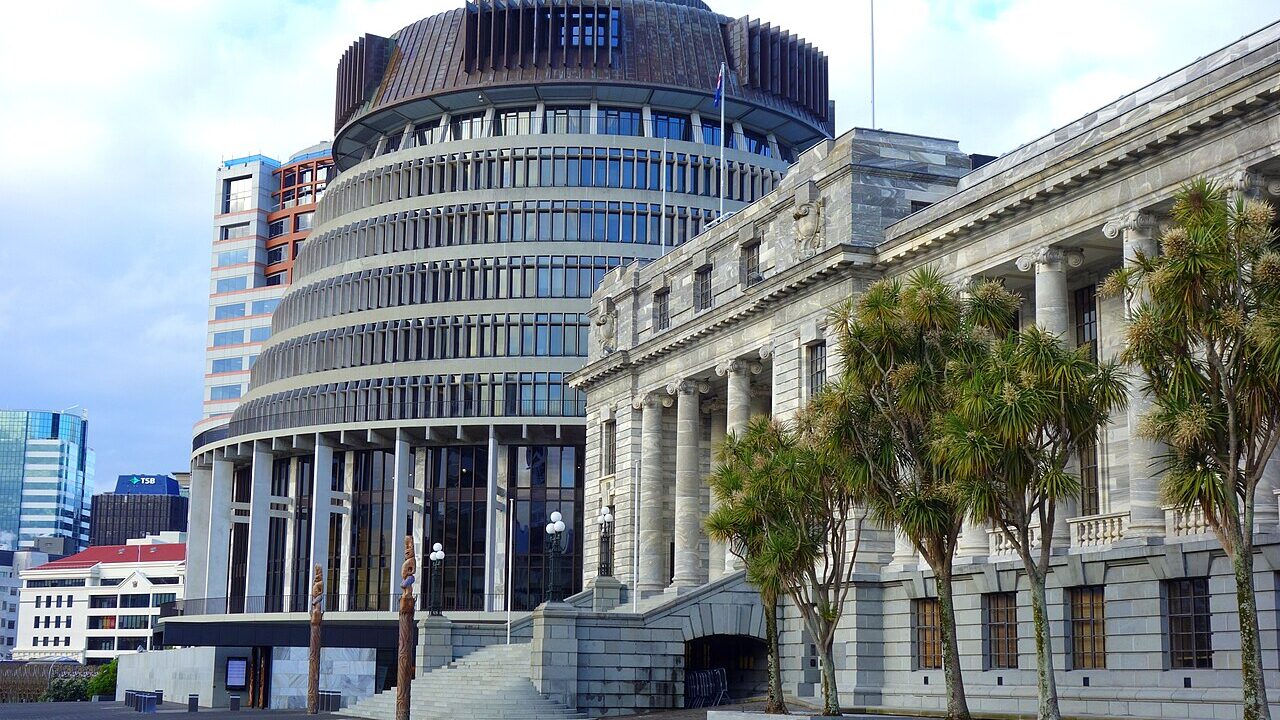
New Zealand’s ruling coalition has fallen one seat short of a parliamentary majority in the final count of the November 7 election, leaving Prime Minister Christopher Luxon needing the support of a centrist party new to parliament to stay in power. The result, published on Friday, makes a seven seat newcomer the kingmaker of New Zealand politics and sets up weeks of delicate talks in Wellington.
The final tally, including special votes cast overseas and outside home electorates, gave the incumbent coalition of National, ACT and New Zealand First 65 seats in the 130 seat parliament, one short of the 66 needed for a majority. National won 40 seats, ACT 13 and New Zealand First 12. On election night the coalition had held a two seat edge, but the count of nearly 485,000 special votes swung two seats away from National.
A newcomer holds the balance of power
The Opportunity Party, a centrist group contesting its first election, won seven seats and now decides the next government. Its leader, 38 year old business consultant Qiulae Wong, said she would negotiate first with National, the largest party, and that she could work with either side. Her party built support on universal basic income funded by a land value tax, alongside stronger climate commitments and a ban on bottom trawling.
Luxon said National would work with its coalition partners and Opportunity to form a government and avoid a fresh election. But the talks will be fraught, since Opportunity policies clash with parts of the coalition agenda, and Luxon will need the agreement of three divergent minor parties to secure his second term. If no deal can be reached, New Zealand would have to hold fresh elections.
No path for the left
The figures also close the door on the centre left. Labour won 36 seats, and together with the Green Party and Te Pati Maori it holds 58 seats, not enough to form a government even with Opportunity support. Labour leader Chris Hipkins admitted as much on Friday, in what read as a concession of defeat, even though Labour won the popular vote, 30 percent against National 28 percent.
The result reflects a loss of support for Luxon driven by a stagnant economy, in a rebuke to the major parties. The last coalition talks lasted 40 days, and the incumbent government will continue as a caretaker while the new one is formed. The final election count has made one thing clear: in Wellington, the smallest party in the room now holds the most power. Election integrity is also under pressure across the region: Taiwan flagged nearly 2700 China linked accounts to Meta before its own local elections, and an Australian MP Helen Haines was critically injured in an incident that has shaken politics across the Tasman.