
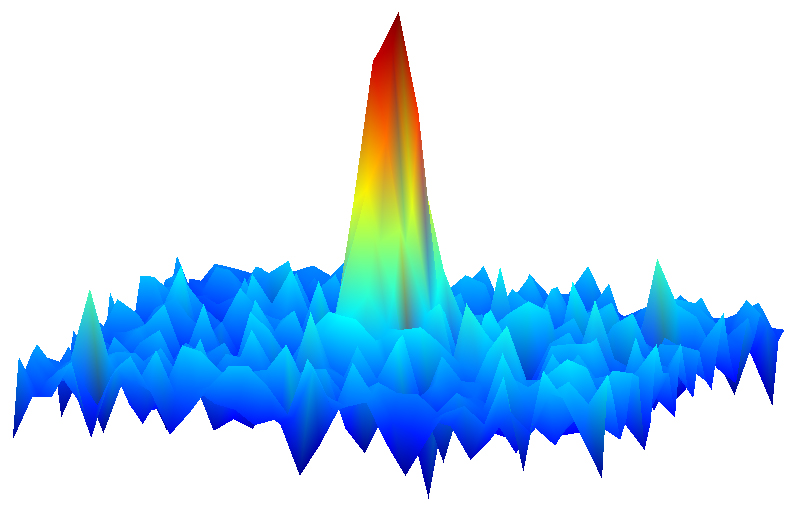
Nearly a century after they were predicted, physicists have created and observed unusual quantum structures known as Bethe strings in an ultracold gas, giving researchers a highly controllable way to explore some of the strangest states in quantum physics, according to reports.
In 1931, physicist Hans Bethe proposed that particles in certain quantum systems restricted to one dimension could join together into collective states now called Bethe strings. These structures differ fundamentally from familiar molecules. Rather than being connected through chemical bonds, the particles remain bound because of their interactions with one another, and the resulting states can exist only in one dimension.
To produce them, researchers started with a cloud of caesium atoms cooled to within only a few billionths of a degree above absolute zero. They then separated the cloud into several thousand extremely narrow tubes. Within each tube, the atoms are effectively restricted to moving along a single direction, creating the one-dimensional environment the strings require. The researchers can also precisely adjust how strongly the atoms interact.
By tuning those interactions from repulsive to attractive, the team made the atoms bind together into clusters of different sizes, including larger groups containing six or more particles, according to reports. Instead of simply collapsing, the strings survived collisions with one another inside the tubes. When released into three dimensions, they fell apart and freed extra energy, confirming their presence. The findings were published in a peer-reviewed journal.
Bethe strings remained primarily a theoretical idea for much of the past century, though experiments had previously detected them in solid-state magnetic systems. Creating them in an ultracold gas matters because the conditions can be adjusted at will, letting scientists make the strings collide and probe their remarkable stability. It is a rare case of a 95-year-old mathematical prediction becoming a laboratory tool.