
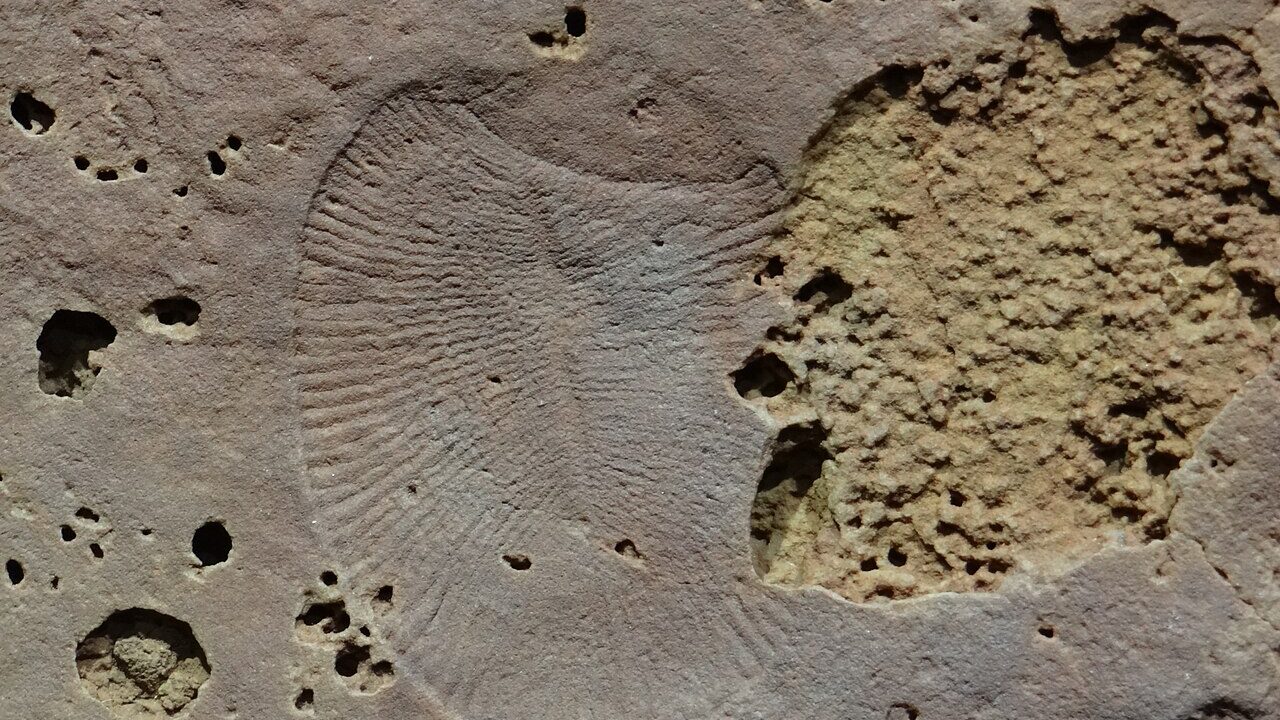
Animals may have evolved up to 200 million years earlier than the fossil record suggests, according to a new international study that challenges one of palaeontology’s most basic dating assumptions.
The research, published in the journal Science Advances on 2 October and led by the University of Oxford, argues that scientists have been reading too much into the absence of animal fossils in a celebrated 590-million-year-old Chinese deposit known as the Weng’an Biota. Because that site preserves microscopic organisms in exquisite detail yet contains no definitive animals, researchers had inferred that animal life must have arisen afterwards.
The flaw in the fossil logic
The team tested that reasoning against a younger, equally well-preserved deposit — the Kheseen Biota in Mongolia — which also lacks identifiable animal fossils even though animals are documented from other sites of the same age around the world. If absence from such a deposit does not prove animals were missing then, the researchers argue, it cannot prove they were missing from the older Weng’an either.
Instead, the scientists calibrated their “molecular clock” analyses — which estimate evolutionary splits from genetic differences between living species — against three older fossil sites dated between 850 and 730 million years ago, in Australia, Norway and Arizona. All could plausibly have preserved early animals, yet none has yielded them. On that recalibration, the origin of animals shifts back to roughly 800 to 700 million years ago.
A hidden chapter of evolution
The finding fits a long-running pattern: molecular clocks have repeatedly suggested animals are older than their fossils admit. Chemical biomarkers in ancient rocks already hint at sponge-like life at least 650 million years ago, tens of millions of years before the oldest clear animal fossils.
It also raises a striking possibility — that animals predate the planet-wide “Snowball Earth” ice ages that began about 720 million years ago, and somehow endured them. As one independent expert noted, the real puzzle now is what happened inside the evolutionary “black box” between the true origin of animals and their first fossil appearance. The university’s summary of the research sets out the evidence in full.