
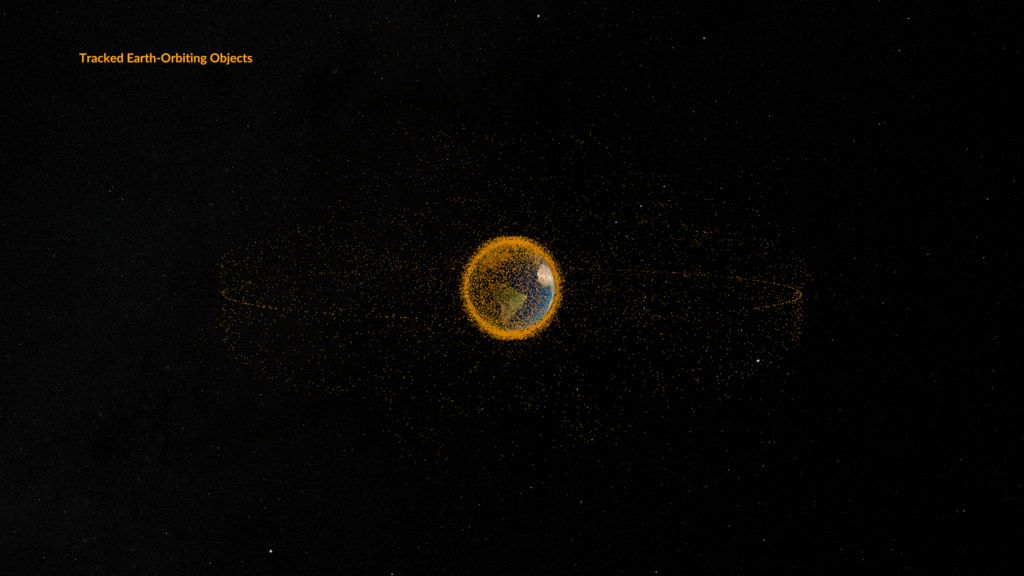
On October 9, 2026, the tracked population of satellites and debris in Earth orbit stood at the centre of how operators plan launches, station-keeping and collision avoidance — a shift that has turned space-traffic data into infrastructure as essential to spaceflight as weather data is to aviation.
The scale explains the concern. Tracking networks follow tens of thousands of objects large enough to catalogue — spent rocket stages, dead satellites, fragments of collisions and explosions — while statistical models put the number of smaller, untrackable pieces in the millions. An object too small to destroy a satellite outright can still end a mission: at orbital closing speeds, a paint fleck carries the energy of a bullet, and a centimetre-sized fragment can cripple a spacecraft it was never seen approaching.
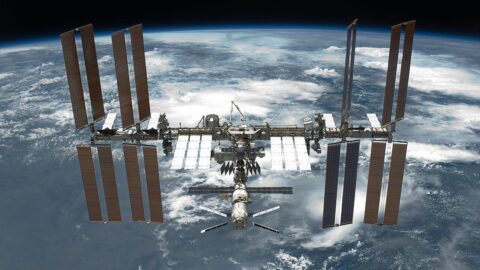
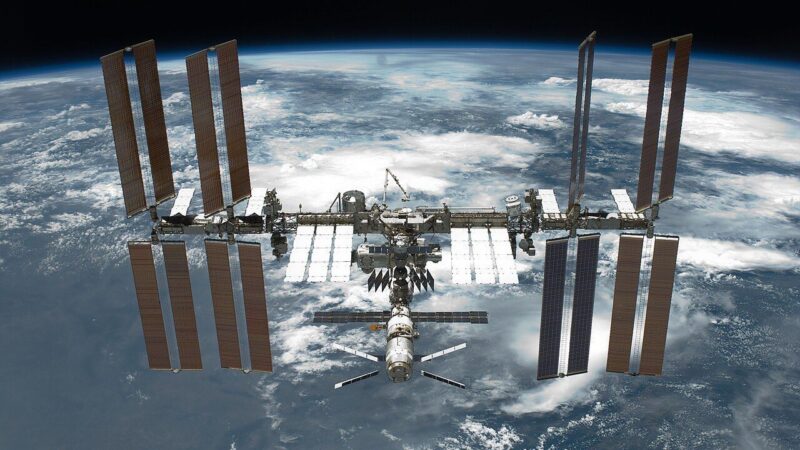
The daily practice is called conjunction assessment. Sensors — ground radars and telescopes, increasingly supplemented by commercial trackers — refine each catalogued object’s path, and software screens for predicted close approaches days ahead. Operators of manoeuvrable satellites receive warnings and, when the probability of collision crosses agreed thresholds, move their spacecraft. The International Space Station, with crew aboard, manoeuvres on the strictest rules of all.
A busier sky
Mega-constellations have changed the arithmetic. Thousands of near-identical satellites in shared orbital shells mean the screening workload grows with every launch batch, and operators now automate much of the avoidance dance — SpaceX has reported performing tens of thousands of Starlink avoidance manoeuvres in a single half-year. Regulators have begun to respond: disposal rules increasingly require dead satellites to deorbit within years rather than decades, and agencies are funding active debris removal demonstrations to grapple with the largest, riskiest hulks already up there.
The nightmare beneath the policy talk is the Kessler syndrome — a cascade in which one collision seeds fragments that cause further collisions. No such cascade has begun, but every new fragment raises the background risk that makes the next one likelier. That is why the visualisations of a crowded orbit now sit in the same briefings as launch weather: debris data is no longer a specialist’s concern but a condition of flying at all. GlobeNews9’s Health & Science Desk will keep following the tracking and clean-up efforts as they develop.
Related reading: Nobel Week Puts a Price and a Calendar on Scientific Prestige · Artemis II Science Data Release Opens a New Archive From the Moon Flight · Chemistry Nobel Rewards the Science of Mirror-Image Molecules