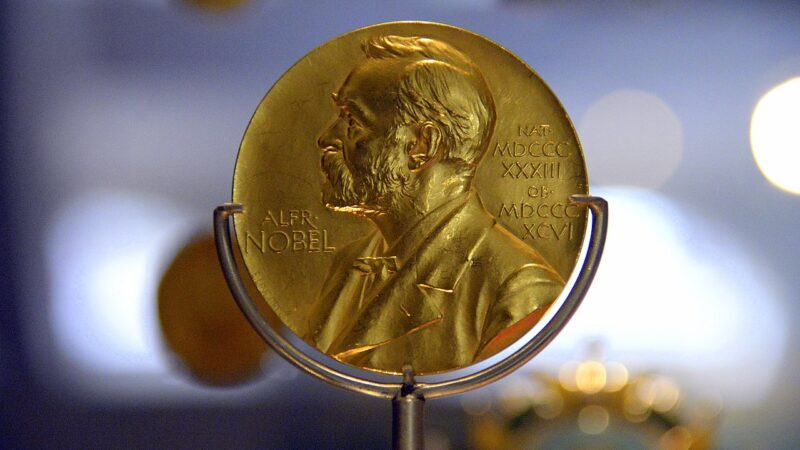

On October 9, 2026, the Nobel Assembly at Karolinska Institutet awarded the 2026 Nobel Prize in Physiology or Medicine jointly to Karl Deisseroth of Stanford University, Peter Hegemann of Humboldt University of Berlin and Georg Nagel of the University of Würzburg for the discoveries that created optogenetics — the technique of switching individual nerve cells on and off with light.
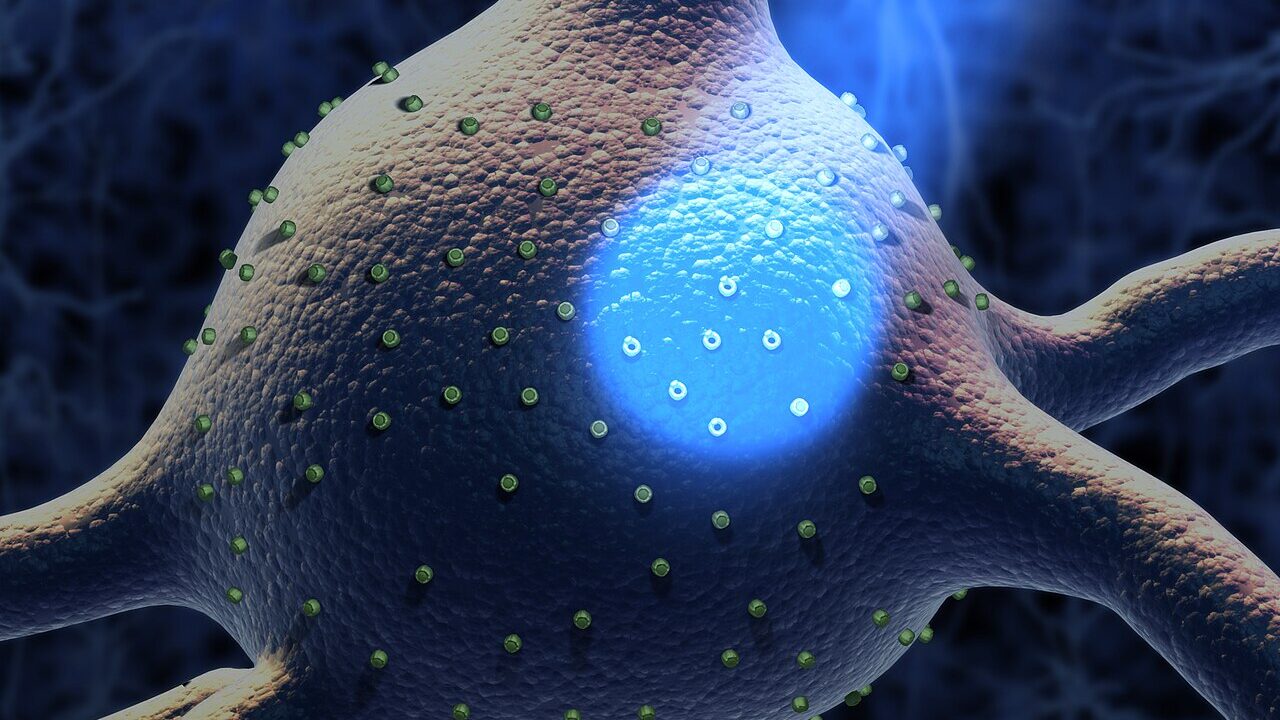
The method began with a single-celled green alga, Chlamydomonas reinhardtii, which swims toward light. In the early 1990s Hegemann set out to understand how the alga senses its surroundings so quickly, and with Nagel he identified the answer: channelrhodopsins, proteins that are at once light sensors and ion channels. When blue light strikes channelrhodopsin-2, the protein opens a pore in the cell membrane and lets charged ions flood in, firing an electrical signal within milliseconds. The pair showed the protein worked when transplanted into other cells, including human cells, in work published in 2002 and 2003.
The decisive step came in 2005, when Deisseroth’s laboratory at Stanford introduced the channelrhodopsin gene into rat neurons and drove precise spikes of neural activity with brief pulses of blue light. Because mammalian tissue already contains the retinal cofactor the protein needs, the tool worked inside living brains, and by 2007 it had been extended to mice. The technique was named optogenetics in 2006 and spread through neuroscience with unusual speed.
Why the prize matters
Before optogenetics, researchers mostly watched the brain correlate: they could record activity near a behaviour, or blunt whole regions with drugs and electrodes, but they could not easily prove that a defined set of cells caused a memory, a movement or a mood. Light-gated channels changed that. A researcher can now activate one circuit and watch behaviour change, then silence it and watch the behaviour stop — the difference between a map of correlations and a test of cause.
The approach has since been used to probe circuits implicated in Parkinson’s disease, epilepsy, addiction, schizophrenia and depression in animal models, and optogenetic methods are being explored clinically for restoring vision. Its clinical use in the brain remains distant — delivering genes and light safely into human tissue is hard — but as a laboratory instrument it has already redrawn maps of memory, movement and mood.
The prize, worth 12 million Swedish kronor, will be presented in Stockholm on December 10. GlobeNews9’s Health & Science Desk will keep following reaction from the laureates’ institutions and the research community.
Related reading: Space Debris Tracking Becomes a Core Part of Orbital Safety · Nobel Week Puts a Price and a Calendar on Scientific Prestige · Artemis II Science Data Release Opens a New Archive From the Moon Flight